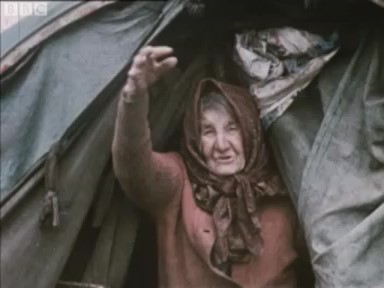
“When George Borrow lived with the Gypsies over 100 years ago, Petulengro told him: ‘Life is very sweet brother; who would wish to die?’
To find out if life was still sweet among English Gypsies, a group of young men whose connections allowed them to penetrate Gypsy family life in a way never before achieved, lived with and filmed two Gypsy families over a period of months in Kent and Essex during 1970 and 1971.
The enquirers found a striking similarity between the present condition of Gypsies and that of nomadic peoples all over the world who have come into direct collision with modern societies. Are the only two solutions integration or destruction?” (Radio Times)

One of the great joys of rummaging around in the past is uncovering something neglected but remarkable. Christian Marnham’s entrancing film A Cold Wind on the Heath (1971), a wondrous portrait of life among three gypsy families, is a work so precious, so original in its style, so romantic and respectful, that it is a mystery that it is not celebrated as one of the great innovative British films of its time. It is a work of tremendous value—for its filmmaking techniques as much as for immortalising a vanishing part of our island’s make-up, and doing so with the wistfulness of a folk song rather than the hard gaze of a documentary. It had one television screening, as part of BBC2’s The World About Us natural history strand, on 5 September 1971.
Beautifully crafted and emotionally alarming, it is a lesson for these progressive yet intolerant times. It is also an elegy. It follows three gypsy families still living, authentically and anachronistically, “the old life”. They trudge a cold, watery and bleak Kent and Essex landscape, finding fewer and fewer places where they can settle, official sites refusing their horses and their open fires. The modern world of pylons, power stations and traffic systems encroaches forebodingly from the horizon, until eventually, the gypsies look broken, defiant yet defeated.
After chancing on the film, I wrote to its creator, Christian Marnham. “I was very charmed by your letter,” he told me. “I’m going to read it to the gypsies, they’ll be very happy I’m sure”. Fascinatingly, the story of Chris’s adventures with these families did not begin and end with this film; it began in his childhood and continues to this day.
“My father farmed, and the landscape all around us in Kent was rather beautiful. The gypsies came every year for hop-picking and would dwell for a month in the meadow. People would say to me: ‘Don’t go down there, they’ll think you’re after their women’. That was true. The women were very beautiful and fiercely protected. I lived with them for a bit, and over the years I continued to visit them. By the time I came to make this film, I’d known them for ten years.

“They are a violent people, and they have become more so as they have had to come into closer contact with the rest of the world. In one of those families that I focused on, there have been three murders. Aged 16, I came back one night from a fight, with my face and knuckles black and blue. The women had pulled us apart. My father, who was a very mild character, and who died recently at the age of 101, had boxed, and he said: “Well, if you must consort with these people, you’d better go and settle it once and for all.” He drove me back down to them in the pouring rain. I was determined that I was not going to take another beating, but when he banged on the caravan, the man appeared and said, “Oh I’ve got something for you,” and produced the front tooth he had lost.”
Determined to learn the language of film, by the late Sixties Chris was working as an editor at Cammell Hudson. “This was when films such as Performance were being made there. Nic Roeg was my mentor. I saw him again not long before he died, and he said: ‘We were both so lucky to have been there.’ No other film company in the world had that magic.
“I was Hugh Hudson’s editor. He worked with all the great cameramen of the day, who would come into my cutting room because down there in Chelsea we had no viewing theatre. In those days we cut on the old Hollywood Moviola, a marvellous thing. I got to know them all, John Alcott, Tony Spratling, they were terribly kind. I had a Bolex camera and decided to make a little film, so I asked them how they got certain shots, what lenses they used and so on, and they helped me.
“First, I made a 25-minute black-and-white film about the gypsies, which I photographed myself. That film is now lost. After I’d made it, I knew that there was a funeral about to take place, so I paid for three camera crews from Alan King Associates to come down and cover that for me. I took some of that footage, and the 25-minute film I’d made, to Bryan Branston at the BBC. He said, ‘Right, what do you want to do?’ I said, “I want to have a series of flashbacks intercut into the proceedings of this funeral”. He said, “Can you really get this? Well, okay, I’ll pay for twelve days”. The result was A Cold Wind on the Heath.

“I wasn’t interested in making a ‘real documentary’. I wanted to make a kind of impressionistic film. Many of the things you see in there I had been part of, having known them so long, situations and scenes that had made impressions in my mind, so I took them to the landscapes that I wanted and explained to them that by shooting from certain angles I could cut about and make it all work, and that they would have to do the same thing for each take. Of course, they immediately grasped this. None of them could read or write, but they had seen movies and some of them had televisions, so they immediately understood. It made them feel very much more confident, that they didn’t have to get it right the first time. They would say, “Are you gonna do it from over there? I think that would be nice”, or they’d argue among themselves about continuity.
“I had three different cameramen because of availability. These were very good fly-on-the-wall television cameramen, but I wanted to do it as John Alcott or Tony Spratling would do it, or David Watkin. I wanted to show that I could weave a spell on the screen. I thought, “What should it really be visually?” The gypsies were the wild and lawless breed as figures in a landscape, so I chose the landscapes and thought, “Which great directors have shot figures in a landscape?” David Lean, of course, and John Ford, so I thought, “Right, this is going to be John Ford”. That was my rather humble aspiration”.

A Cold Wind on the Heath blends recreations of past times with anachronistic scenes of gypsies with traditional horses and wagons placed against modern industrial landscapes—or desolate but equally unwelcoming ones. The film opens with a man standing with his horse while a shoe is forged and fitted, to the sound of a cuckoo call. The pastoral charm of the scene, however, is offset by the heat of a fire rippling the image, a piece of symbolism that will be used again later in the film. We then cut to a funeral parlour. In what was surely a televisual first, the camera shows the pained face of the deceased in the open coffin, wreathed by the weeping mourners saying goodbye. A voiceover tells us that, “Matthew Brazil, an old gypsy, is dead”.
Contrasting with the modern, functional funeral parlour, in an estuary town of post-war buildings and scruffy motor cars, shot on a still, snowy day, we cut to lyrical scenes of gypsy children larking on a muddy coast, scavenging for wood, dressed in waistcoats and caps, as if they have wandered out of some Victorian children’s book. A lilting but melancholy flute-led score celebrates the scene.
Scenes of them sat around the fire are cross-cut with the coffin lid being screwed down. Throughout the film, the joyful spectable of gypsy tradition is contrasted with scenes from the funeral, making it clear that the families are in mourning for not only Matthew but their whole way of life.
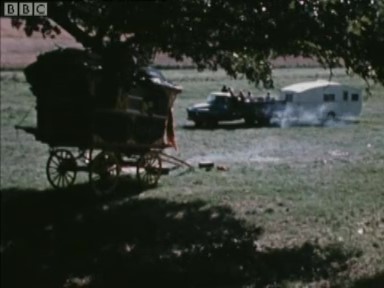
The loss of their horse-drawn ways is the film’s central theme, encapsulated in a mournful scene of one family abandoning their old painted wagon and departing in a truck and towing caravan. Inside another caravan, a family watch a television documentary in which council officials and members of the public spout disgust about them and their lifestyle. The commentary on the programme they are watching states that unlike the old romantic image of the gypsy as “the migrant worker who appeared at harvest-time to pick hops and cherries, or who was often to be seen at the roadside selling clothes pegs”, the gypsy has had to adapt to “more lucrative trades such as car-breaking and scrap-dealing”, being viewed by many as “at best work-shy tax-dodgers and at worse as wholly untrustworthy—in fact, as an alien population”.
The gypsies watch it all with weary detachment, responding to scenes of council-run concreted sites with disinterest. These sites are of no use to them, as they do not allow horses, which this family at least are clinging to for as long as they can. Effective as the sequence is, it is rather craftily created. “I found that report in the BBC archives, but that isn’t what they are watching and reacting to. I needed something to really concentrate their reactions, so showed them something about Biafra”. It’s an interesting variant on the Kuleshov effect (where an audience read an additional meaning into a shot because of what it immediately follows on from). In this sense it is closer to the occasional methods of drama directors from Alan Clarke to William Friedkin of finding prompts outside of a script to capture the required reaction from an actor.

“The mother of the family was marvellous. I’ve always loved John Ford’s Grapes of Wrath, and Ma Jode in particular, that moment where she is sitting by the fire and preparing to leave. And in my film, that woman was the matriarch who holds it all together while the father is breaking down”.
The father of the family is indeed a lost and strikingly sad figure, his tough features now frozen in an expression of confusion. He visits a haunting old woman who reads his palm and wishes him well. It’s an astounding sequence, a folk tale come alive. “They were terribly superstitious”, says Chris. “There was a sense that she was a witch. I was charmed by her, and asked if she would do the film. We shot it as if they were actors”.
This is one of the film’s most innovative techniques, using “real people” to act out their own lives. A tradition had been developing on television in the Sixties of “getting real people to play real people”, Ken Loach’s work on The Wednesday Play often seeing the director casting dockers, union activists, club comedians and singers to bring raw authenticity and conviction to the proceedings. In a less respectable field, three years earlier producer and journalist Elkan Allan had made the controversial, though now all but forgotten, film documentary Love in Our Time, an attempt to look at sexual relationships in the permissive age using (mostly) real people re-enacting their domestic highs and lows.
In the paperback tie-in to the film, Allan explained that the only genuine “slice of life” film he had seen was Running Away Backwards (1965), a Canadian documentary about ex-pats living on Ibiza. Its director, Allan King, was described as having “turned his back on the classic documentary style to make a marriage of fiction and fact”. Allan was electrified by a scene in the film in which a husband and wife were “obviously recreating an argument … and creating, on the screen, an argument about things that really mattered to them. They forgot the camera was there and went at it hammer and tongs. The result was the most vivid and real glimpse of life that I had ever seen on the screen”.
It’s a curious parallel, but despite sharing a cameraman with the titillating Love in Our Time, William Brayne, A Cold Wind on the Health is much closer in spirit to Peter Hall’s gorgeous 1974 film Akenfield, a poetic study of three generations of a rural Suffolk family. Akenfield’s cast was entirely comprised of local people, not a trained actor among them, enacting a fictional story with their own native authenticity. Marnham’s film hovers somewhere between the two, his cast playing themselves—as opposed to re-playing themselves, as in Allan’s film—being prompted to tell their own stories and no one else’s.
Though very much a succession of images than dialogues, the most moving sequence in A Cold Wind on the Heath is a conversation between two men, in which Marnham’s techniques with his subjects are at their most effective. The gypsies have taken to the road, pylons rowed-up on the horizon behind them barring them from going back. They trot along a brutally busy stretch beside a power station, hoping to return to a place they had stayed at once before, only to discover that it is now fenced off. “I just don’t know where we can go, brother”, one mutters, defeatedly. They temporarily make a home in a chalk pit, while the father visits a friend who is now resident at a registered site. Their conversation is mesmerising, the father’s dejected face again an unstable spectacle due to the heat of the fire.
“That man he talks to was very interesting,” says Chris. “He had been in the Army for his national service. He knew very much what had to be said. I said, ‘This is what we want to talk about, this is the background, this is what’s happened to you, weave a spell around it”. Then I would break it and say, “Now can you say this to him”, and we would do it in little bits. Interestingly, the more you break it down and the more takes you do, the more confident they get, because the fear that most people who are not actors have is that they are going to screw it up, which makes them tense. Once they realise you are covering it and that you can do it again if you have to, it frees them up, and once they are freed up, they improvise. And they get better and better with repetition. After we shot that scene, that man disappeared. I looked for him, but he hasn’t been seen by any of them since”.
We end on the two men going their separate ways, one back to the camp he must accept as home, the other to his family, to live his life the only way he knows for the little time left that he can. We close as the mourners leave the funeral, on a snowy, perilous day.
With filming completed, Marnham showed “a very rough cut” to Bryan Branston at the BBC. “He said he was very proud of it and that it was breaking a bit of new ground. He gave me Colin Hill to edit it, a good documentary man. When you get into the cutting room, magically, as you start to trim the film and intercut things, notice people’s reactions and start dropping lines, it’s a bit like the old idea of the sculptor with a block of marble who feels that the spirit of the finished work is already within it. He chops off great bits, chunks go flying and gradually he gets more and more careful until finally he is just caressing it and fine-tuning it”.
“However, I wasn’t entirely satisfied with how it was cut. The schedules for the editing weren’t sufficient. Bryan said, ‘Oh great, I love it, I love the cutting too’. I argued that given the money they had spent on shooting it, with more time I could improve it with some more trimming and intercutting. But rather than spend the money, he insisted it was fine, saying, ‘Oh, you’re a commercials man’.
“The Daily Telegraph gave it a very good review and talked about the painterly feel and the romance of it, which is what I was hoping for, but the Guardian slated it”. Peter Fiddick’s review does acknowledge that, “The visuals … were certainly elegant and gave a sort of image of increasing isolation, but they did it at the expense of the people and of the problem”. Chris says, “He said that I should have been interviewing all these people. But with that approach, usually the producer has a point of view, emphasised in the cutting, which the people are aware of and tend to oblige with. That would not have given a truer picture and wouldn’t have interested me at all”.
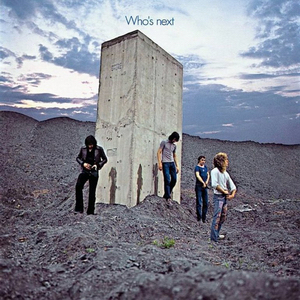
The film’s title, a quote from George Borrow, was disliked by Marnham. “I wanted to call it ‘The Gypos’ because they actually found that name very funny”. He also disliked the choice of the urbane William Franklyn for the occasional voiceover, but the score, by Johnny Scott, was a triumph. “Johnny has done over 100 movies, he was a great favourite of Hugh Hudson. He drove down to the locations in his Rolls-Royce to meet the gypsies and get to know them. Then, when I had a cut, he watched it and I gave him all the cues where music was required”. Scott’s score, blending sorrowful, lone woodwinds with Hammond organs and flange guitar, is rich in that strange, melancholy marriage of sad jazz and quiet progressive rock of the era, the landscapes frequently resembling album covers such as the bleak Who’s Next.
“I arranged a screening of the film for the gypsies, and they felt it was truthful. The bit with them trotting along amid all the traffic by the Dartford tunnel amused them because they said, “We would never take a horse on a road like that”, but they understood what was being said and identified with it. Today, they are living in houses. Some have done pretty well and have bungalows with a paddock for the horse and swanky cars. We are two generations on from those times, and when I visit, the older ones say, ‘Tell them how it was, tell them what we was like’.

Chris has observed closely over the years the gypsies’ reactions to modern society—and to television in particular. “That family got a television and a generator in 1964. They put the television outside by the fire, around which they would cook and eat and tell stories into the night. The television sat in an upturned box with bits of plastic lace and ornaments, they made it a kind of shrine. It was a window on the world for them. I remember that when Colonel Glenn was orbiting the earth, whereas they would have said, ‘Kaka, chavvie’—meaning ‘Hush, child’—’or I’ll hatch you to the monk” or “to the leper”, medieval phrases that had been handed down, it now became, “Kaka, chavie, or I’ll hatch you to the man in space”.
Chris has helped some of them to learn to read over the years. “Some also learned to read by the television commercials. They had never had a day at school in their lives. Then they started to become part of the world and a kind of degeneracy set in, and a great gap between each generation. One of the boys in the film whom I helped to learn to read has recently made a bit of money and taken trips to South Africa, whereas previously he had never been even to London”.
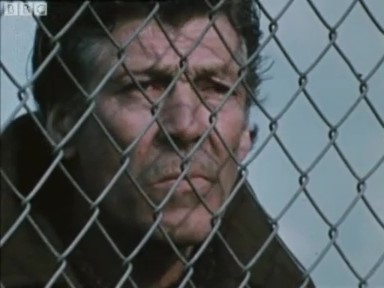
Despite his admission of the violence in this persecuted but persistent culture, there is no trace of it in this film; instead, there is a poetic solemnity, a wistful listlessness. Yet viewed today, the film is as much an elegy for a lost England as a threatened community. The bleak chalkpit landscape that the gypsies are dwarfed by is now Lakeside shopping centre, the road they trot along now towered over by the spectacular Queen Elizabeth II bridge. A Cold Wind on the Heath captures the gypsies’ traditional way of life at the end of the road, but also captures England itself at a crossroads, destroying and redeveloping both the bomb-damaged and the beautiful with equal vigour.
My thanks to Christian Marnham for sharing his memories of making this wonderful film.
 Dreams Gathering Dust
Another lovely piece of writing. Not only an elegy to a vanished way of life, but also to a long-lost era of British television.
LikeLike